
Key Takeaways
- It's typically billed monthly and runs for a fixed term - usually 6 or 12 months - with a notice period for either side to terminate.
- While this sounds more flexible, it usually results in inconsistent standards, unreliable scheduling, and higher per-visit costs.
- What does a cleaning contract typically include? A well-structured cleaning contract covers several key areas.
- Quality management describes how standards are maintained - typically through regular inspections, checklists, and a process for raising and resolving issues.
If you've been searching for commercial cleaning services, you've probably come across the term "contract cleaning." It sounds formal and corporate, but it's actually a straightforward concept that...
If you've been searching for commercial cleaning services, you've probably come across the term "contract cleaning." It sounds formal and corporate, but it's actually a straightforward concept that applies to businesses of all sizes - from a small office above a shop in Harrow to a multi-floor medical centre in Watford.
This guide explains what contract cleaning means, how it works, what to expect from a contract, and whether it's the right choice for your business.
What is contract cleaning?
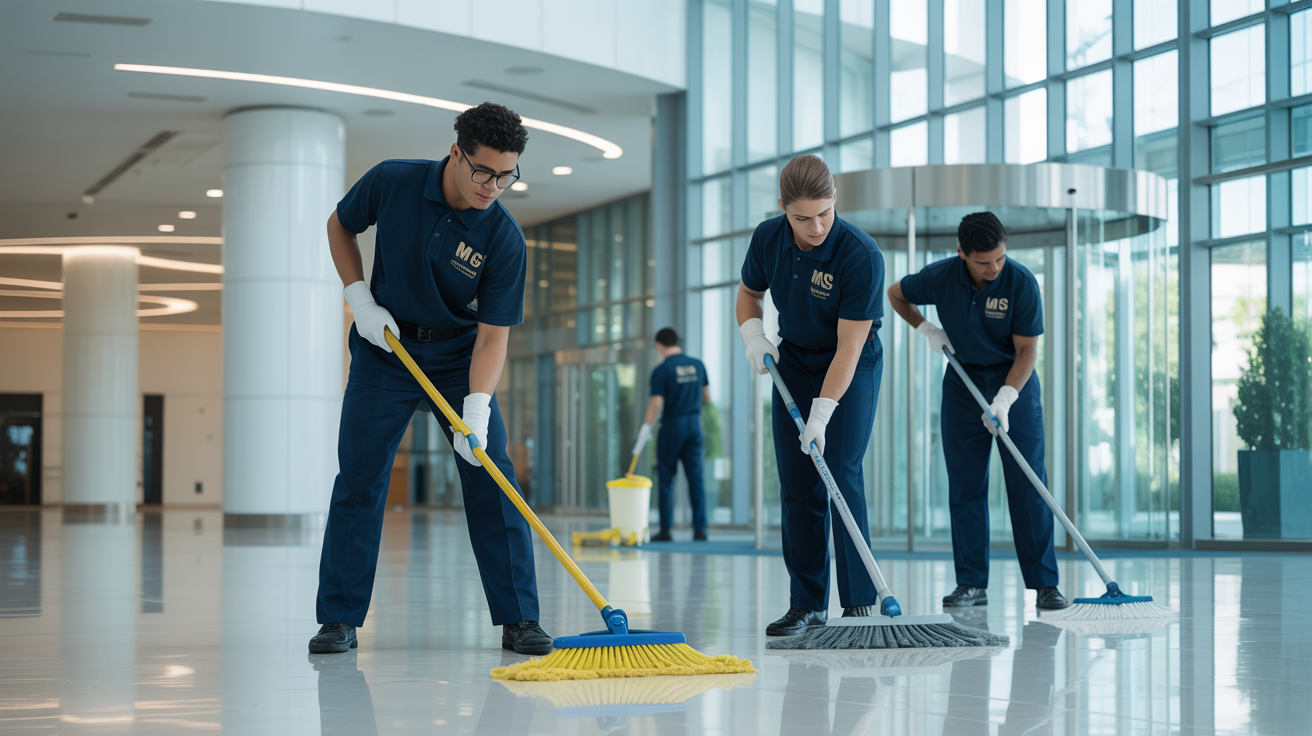
Contract cleaning is simply an ongoing agreement between a business and a professional cleaning company. Instead of hiring cleaners ad-hoc when the office gets visibly dirty, or employing your own cleaning staff, you sign a contract with a cleaning company that provides regular, scheduled cleaning at an agreed price.
The contract specifies what gets cleaned, how often, how many cleaners attend, what products and equipment are used, and what the cost is. It's typically billed monthly and runs for a fixed term - usually 6 or 12 months - with a notice period for either side to terminate.
The alternative is "ad-hoc cleaning" where you call a cleaner when needed, with no ongoing commitment. While this sounds more flexible, it usually results in inconsistent standards, unreliable scheduling, and higher per-visit costs.
What does a cleaning contract typically include?
A well-structured cleaning contract covers several key areas.
Scope of work defines exactly what the cleaning team will do on each visit. This is usually broken down by area - reception, offices, meeting rooms, kitchen, toilets - and by task - vacuum, mop, dust, sanitise, empty bins. A good contract is specific enough that both sides know exactly what's expected.
Frequency specifies how many times per week or month the cleaning takes place. Most office cleaning contracts run three to five times per week for larger offices, or twice to three times per week for smaller ones. Medical facilities and food businesses often need daily cleaning.
Staffing covers how many cleaners will attend and for how many hours. This matters because a single cleaner spending one hour in a 2,000 sqft office produces a very different result than two cleaners spending one hour each.
Products and equipment should be provided by the cleaning company as part of the contract. This includes commercial vacuum cleaners, mops, buckets, microfibre cloths, and all cleaning chemicals. You shouldn't be subsidising their operating costs through your own supplies.
Quality management describes how standards are maintained - typically through regular inspections, checklists, and a process for raising and resolving issues.
Insurance is critical. The contract should confirm the cleaning company carries adequate public liability insurance (at least £2 million) and employer's liability insurance (legally required if they employ staff).
How does contract cleaning compare to employing your own cleaner?
Many small businesses start by employing their own cleaner - it seems simpler and cheaper. But there are hidden costs and risks that make contract cleaning more practical for most businesses.
When you employ a cleaner directly, you take on employer responsibilities including PAYE, National Insurance, pension auto-enrolment, holiday pay, sick pay, and employment rights. If the cleaner is sick, you have no cover. If they leave, you have to recruit and train a replacement. You also need to provide and maintain equipment and buy supplies.
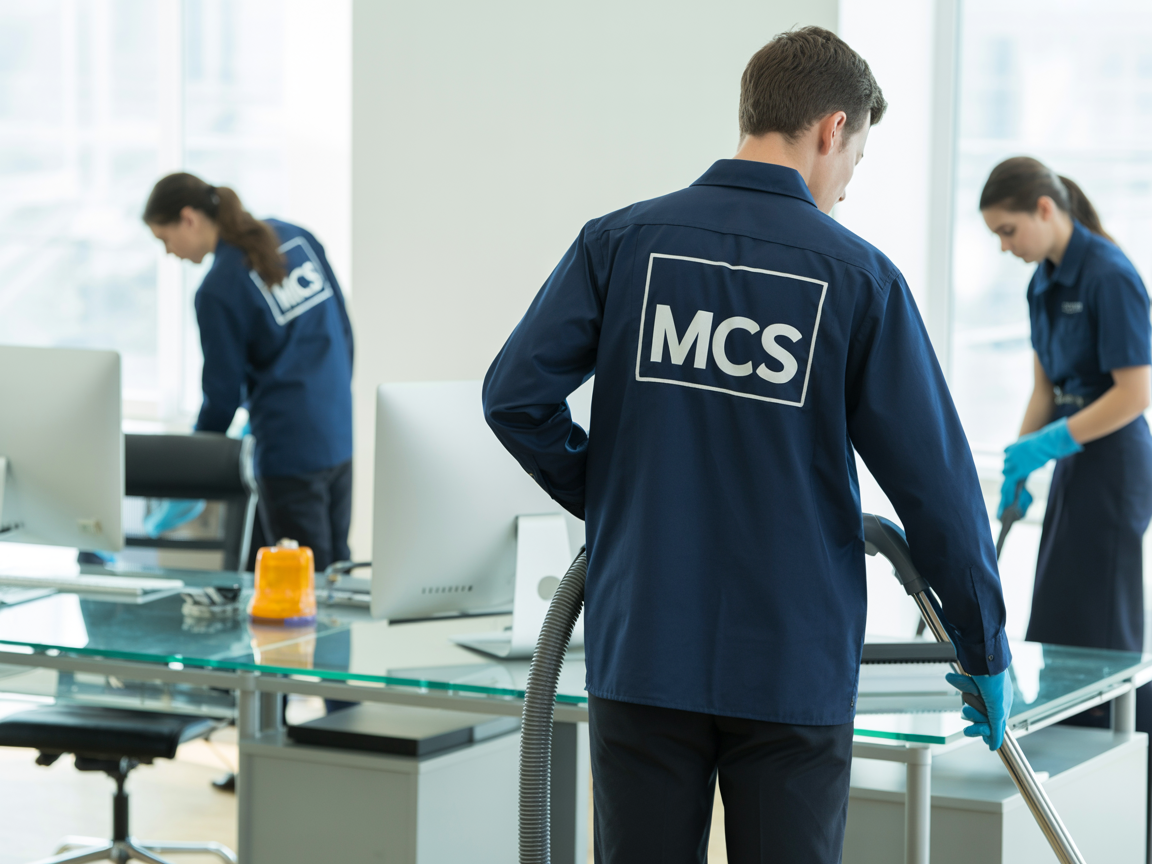
With contract cleaning, the cleaning company handles all of this. They employ the staff, manage holidays and sickness cover, provide equipment and supplies, carry insurance, and maintain quality standards. If a cleaner is sick, they send a replacement. If there's a performance issue, they handle it.
The break-even point is usually around 10-15 hours per week of cleaning. Below that, a contract is almost always cheaper and less hassle than direct employment. Above that, the calculation gets closer, but the management overhead of direct employment still tips the balance toward contract cleaning for most businesses.
How much does contract cleaning cost?
Contract cleaning in North West London is typically priced by the hour, with rates varying based on the type of premises, the time of cleaning (evenings and weekends cost more), and the scope of work.
Standard office cleaning: £14-£18 per hour per cleaner. An average small office needing 6 hours per week of cleaning would cost roughly £350-£430 per month.
Medical facility cleaning: £16-£22 per hour per cleaner. Higher due to the specialist training, colour-coded equipment, and medical-grade products required. CQC compliant cleaning commands a premium because of the compliance documentation and training involved.
Retail and hospitality: £14-£18 per hour, similar to office cleaning but may require different scheduling (early morning or late evening).
Industrial and warehouse: £13-£16 per hour. Simpler scope but often larger areas.
Most cleaning contracts include a minimum term of 3-6 months with 30 days' notice thereafter. This gives both sides stability - the cleaning company can plan staffing, and you get consistent pricing without monthly renegotiation.
How do you choose the right contract cleaning company?
When selecting a cleaning company for a contract in Harrow, Watford, Wembley, or anywhere in North West London, there are several key things to check.
Ask for a site visit and a written specification before accepting a quote. Any company that quotes over the phone without seeing your premises is guessing at the price and will either overcharge you or underdeliver.
Check their insurance certificates - public liability and employer's liability should both be current and adequate. Ask whether their staff are employed directly or subcontracted, and whether they have DBS checks where relevant.
Look at Google reviews from other commercial clients. Reviews from businesses mentioning reliability, consistency, and good communication are more valuable than generic five-star ratings.
If your premises require specialist cleaning - medical facilities, food preparation areas, or environments with sensitive equipment - make sure the company has relevant experience and qualifications. CQC compliance, food hygiene training, or industry-specific certifications should be verifiable.
We wrote a detailed guide covering everything to check: How to Choose a Commercial Cleaning Company - 10 Things to Check.
How do you get started with contract cleaning?
If you're considering contract cleaning for your business, the first step is a site visit and needs assessment. A good cleaning company will walk through your premises, understand how the space is used, ask about your priorities and any special requirements, and then provide a written specification and quote.
Our office cleaning service covers businesses across Harrow, Watford, Pinner, and the wider North West London area. We also provide specialist medical cleaning and GP surgery cleaning on contract.
Get a free quote or call 020 7993 8722.
Frequently Asked Questions
Contract cleaning is a regular, ongoing agreement (daily, weekly, or monthly) with agreed scope and pricing. Ad-hoc cleaning is a one-off or irregular service booked as needed. Contract cleaning is typically cheaper per visit and provides more consistent results.
Need help with commercial cleaning?
Get a free, no-obligation quote from MCS Cleaning. Serving Harrow, Watford, Pinner & North West London.
Written by MCS Cleaning & Facilities
Professional commercial cleaning services in Harrow, Watford & North West London. CQC compliant, fully insured, 60+ five-star Google reviews.
Related Articles
How Much Does Communal Area Cleaning Cost? A Pricing Guide for Property Managers
Managing the cleaning budget for a block of flats or housing association property is a balancing act. Spend too little and residents complain, the building deteriorates, and service charge disputes...
How to Choose a Commercial Cleaning Company in North West London: 10 Things to Check
Choosing a cleaning company for your business seems straightforward — until you end up with unreliable cleaners, missed visits, or worse, damage to your premises. The commercial cleaning market in Nor

Commercial Cleaning in Pinner: Essential Guide for Local Businesses
Everything Pinner businesses need to know about commercial cleaning services. From scheduling to benefits, learn how professional cleaning can benefit your business.