Key Takeaways
- Then you get a message from the landlord saying they're deducting £350 from your deposit for "professional cleaning." Is that fair? Can they do that? The short answer: sometimes yes, sometimes no.
- Research shows that 29% of tenants with cleaning-related deductions paid more than £500, and 16% paid more than £750.
- If your contract says you must hire a specific cleaning company, or that you must have the property "professionally cleaned" before checkout, that clause is not enforceable.
- You must still return the property to the same standard of cleanliness as when you moved in, accounting for fair wear and tear.
You kept the place tidy, you ran the hoover round before moving out, and you wiped down the kitchen. Then you get a message from the landlord saying they're deducting £350 from your deposit for "profe
You kept the place tidy, you ran the hoover round before moving out, and you wiped down the kitchen. Then you get a message from the landlord saying they're deducting £350 from your deposit for "professional cleaning." Is that fair? Can they do that?
The short answer: sometimes yes, sometimes no. Your rights depend on the condition of the property when you moved in, what your tenancy agreement says, and what evidence exists. Here's what you need to know.
Why is cleaning the biggest cause of deposit disputes?
The Tenancy Deposit Scheme handles thousands of disputes every year, and cleaning is consistently the number one reason for deductions. Over half of all deposit disputes involve cleaning in some form. Research shows that 29% of tenants with cleaning-related deductions paid more than £500, and 16% paid more than £750.
These aren't small sums. And many of these deductions could have been avoided with either a proper clean or a better understanding of your rights.

What did the Tenant Fees Act 2019 change for tenants?
Since 1 June 2019, the Tenant Fees Act has made it illegal for landlords in England to include clauses in your tenancy agreement that require you to pay for professional cleaning. If your contract says you must hire a specific cleaning company, or that you must have the property "professionally cleaned" before checkout, that clause is not enforceable.
This was a significant win for tenants. Previously, landlords could - and frequently did - require tenants to pay for expensive cleaning services as a condition of the tenancy.
However, the Act did not change your fundamental obligation. You must still return the property to the same standard of cleanliness as when you moved in, accounting for fair wear and tear. If the property was professionally cleaned before you moved in (which should be recorded in your inventory), then you need to return it to a professionally cleaned standard. You just can't be told which company to use.
What counts as fair wear and tear?
Fair wear and tear is damage or deterioration that happens through normal, everyday use of the property. Carpets wearing slightly thinner in high-traffic areas, minor scuff marks on painted walls, and small scratches on worktops from normal use are all fair wear and tear.
What is not fair wear and tear: heavy grease build-up in the oven, limescale covering bathroom taps and shower screens, carpet stains from spilled drinks, mould growing in the shower grout because it was never cleaned, and grease splashes on the kitchen wall behind the cooker.
The key question is always: was this caused by normal daily living, or by neglect? If you never cleaned the oven during a two-year tenancy and it's now caked in grease, that's neglect, not wear and tear.
When can your landlord make cleaning deductions?
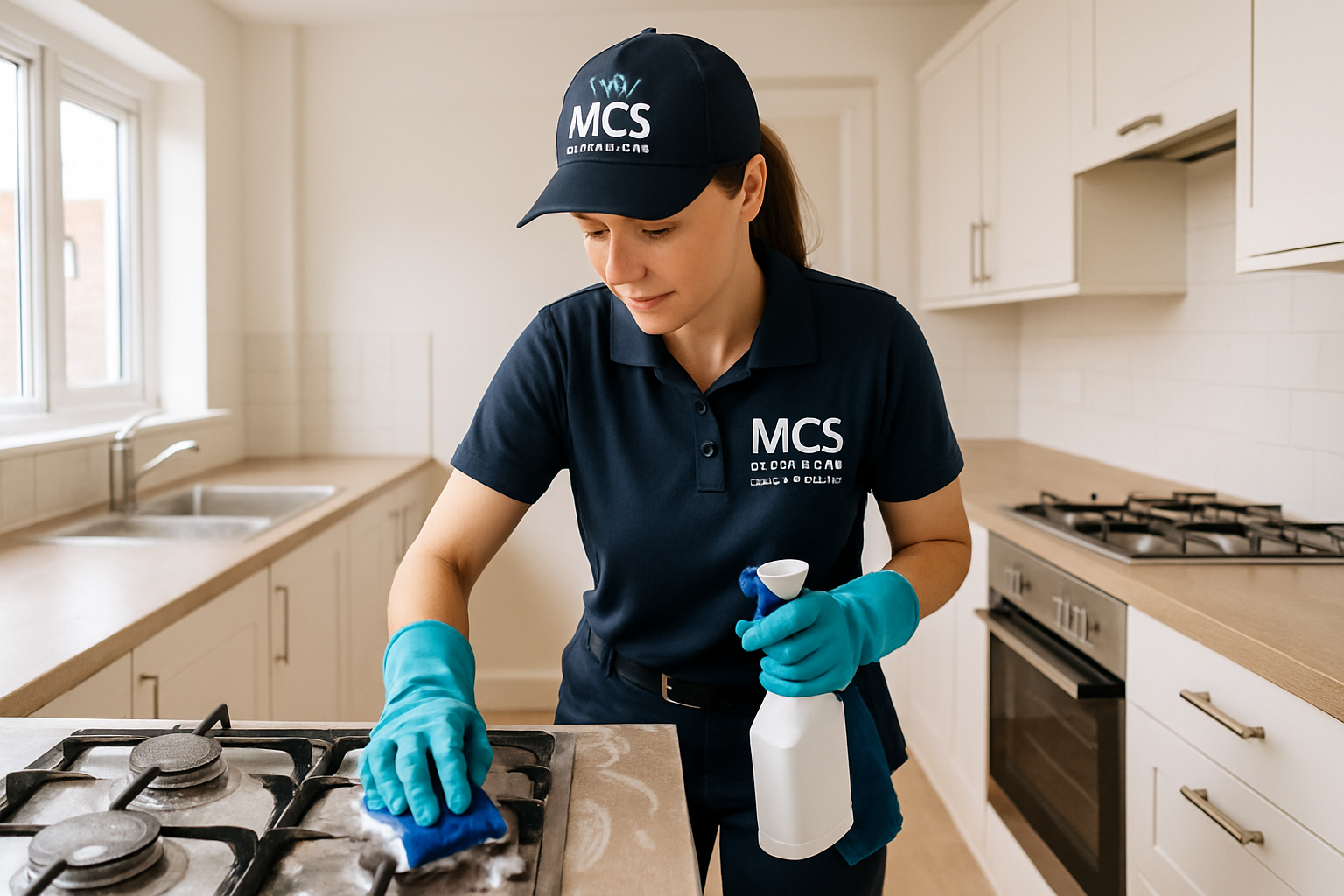
Your landlord can legitimately deduct cleaning costs from your deposit when the property is returned in a worse condition than it was at the start of the tenancy (beyond fair wear and tear), and they have evidence to support this. That evidence typically means a detailed inventory with photos from the start of the tenancy compared with the checkout condition.
The deduction must be reasonable and proportionate. If you left one room slightly dusty, the landlord cannot charge for a full property professional clean. They can only charge for what's needed to bring the property back to its original standard.
When can your landlord not make deductions?
Your landlord cannot deduct cleaning costs if the property is in the same condition as when you moved in (accounting for wear and tear), if there's no inventory or photographic evidence of the original condition, if the deduction is for "betterment" (making the property cleaner than it was when you moved in), or if they're requiring professional cleaning when the property was not professionally cleaned before your tenancy.
The absence of an inventory is particularly important. Without a documented record of the property's condition at the start of your tenancy, the landlord has no benchmark to measure against. In TDS disputes, adjudicators consistently side with tenants when documentation is incomplete.
How do you protect your deposit from cleaning deductions?
Start protecting yourself from the very first day of your tenancy. Take your own photos and videos of the property when you move in, even if a professional inventory has been done. Note any existing marks, stains, or cleanliness issues in writing and send them to your landlord or agent within the first week.
During your tenancy, keep the property reasonably clean. This doesn't mean obsessive weekly deep cleans, but it does mean regular cleaning of the kitchen and bathroom, dealing with spills promptly, and not letting the oven build up a year's worth of grease.
When moving out, clean the property thoroughly or hire a professional cleaner. Keep all receipts. If you hire a professional cleaning company, choose one that offers a 48-Hour Re-Clean Guarantee - this means if the landlord raises issues, the cleaning company will return and re-clean at no cost. This is your strongest protection.
Take timestamped photos of every room after the clean, including close-ups of the oven, bathroom, and any areas that were problematic. These photos are your evidence in any dispute.
How do you dispute an unfair deposit deduction?
If your landlord makes a deduction you believe is unfair, you don't have to accept it. In England, your deposit must be held in a government-approved tenancy deposit scheme (DPS, TDS, or MyDeposits). You have the right to raise a dispute through whichever scheme holds your deposit.
Gather your evidence: your original inventory and check-in photos, your own move-out photos, receipts from professional cleaning, and any correspondence with your landlord. Submit your dispute through the deposit scheme's free resolution service.
Adjudicators are independent and look at the evidence from both sides. They consistently rule in favour of tenants who can demonstrate they returned the property to a reasonable standard and have photographic evidence to back it up.
What is the smartest investment to protect your deposit?
For most tenants, hiring a professional end of tenancy cleaner is the most cost-effective way to protect your deposit. A professional clean for a 2-bed flat costs around £200-£280. A deposit deduction for inadequate cleaning can easily be £400-£600 or more.
The maths is simple: spend £200 on a guaranteed professional clean, or risk losing £500+ from your deposit. When you factor in the stress, the time, and the uncertainty of DIY cleaning, professional cleaning wins every time.
Our end of tenancy cleaning service includes a 48-Hour Re-Clean Guarantee, full receipts for your records, and we cover all of North West London including end of tenancy cleaning in Harrow, end of tenancy cleaning in Wembley, and Watford.
Get a free quote or call 020 7993 8722.
Frequently Asked Questions
No. Fair wear and tear is natural deterioration from everyday use. Faded paint, minor carpet wear in walkways, and small scuff marks are all fair wear and tear. Your landlord cannot deduct for these.
Need help with end of tenancy cleaning?
Get a free, no-obligation quote from MCS Cleaning. Serving Harrow, Watford, Pinner & North West London.
Written by MCS Cleaning & Facilities
Professional commercial cleaning services in Harrow, Watford & North West London. CQC compliant, fully insured, 60+ five-star Google reviews.
Related Articles

Moving Out This Summer? Your End of Tenancy Cleaning Survival Guide
Summer is peak moving season across North West London. Tenancy agreements that started in September cluster their renewals and endings around June, July, and August. Letting agents in Harrow, Watfo...
How Much Does End of Tenancy Cleaning Cost in North West London? (2026 Guide)
Cleaning disputes are the number one reason tenants lose part of their deposit in the UK. According to the Tenancy Deposit Scheme, over half of all deposit deductions involve cleaning — and the averag
The Ultimate End of Tenancy Cleaning Checklist for North West London Tenants (2026)
Moving out of a rental property is stressful enough without worrying about whether your clean will pass inspection. Inventory clerks working with letting agents across Harrow, Watford, Wembley, and th