Key Takeaways
- If you're a practice manager responsible for maintaining cleaning standards at a GP surgery, you know that CQC inspections can make or break your practice's rating.
- This guide explains exactly what CQC expects, what inspectors look for, and how to make sure your cleaning arrangements meet the required standards.
- Which regulations govern GP surgery cleaning? Two CQC regulations are directly relevant to cleaning in GP surgeries.
- Regulation 12: Safe care and treatment requires that providers assess and prevent the risk of infection.
If you're a practice manager responsible for maintaining cleaning standards at a GP surgery, you know that CQC inspections can make or break your practice's rating. Cleaning and infection control are
If you're a practice manager responsible for maintaining cleaning standards at a GP surgery, you know that CQC inspections can make or break your practice's rating. Cleaning and infection control are among the first things inspectors assess, and failures in this area can lead to enforcement action, a requirement to improve, or a downgraded rating that's publicly visible on the CQC website.
This guide explains exactly what CQC expects, what inspectors look for, and how to make sure your cleaning arrangements meet the required standards.
Which regulations govern GP surgery cleaning?
Two CQC regulations are directly relevant to cleaning in GP surgeries.
Regulation 12: Safe care and treatment requires that providers assess and prevent the risk of infection. In practical terms, this means your surgery must have effective cleaning procedures that prevent the spread of healthcare-associated infections. The cleaning must be regular, documented, and appropriate for a clinical environment.
Regulation 15: Premises and equipment requires that premises used for care are clean, suitable for their intended purpose, and properly maintained. This covers not just the consultation rooms but the entire surgery - waiting areas, reception, corridors, patient toilets, staff areas, and clinical waste storage.
Together, these regulations mean that a GP surgery needs to demonstrate a higher standard of cleanliness than a standard office or commercial premises. Standard commercial cleaning is not sufficient.
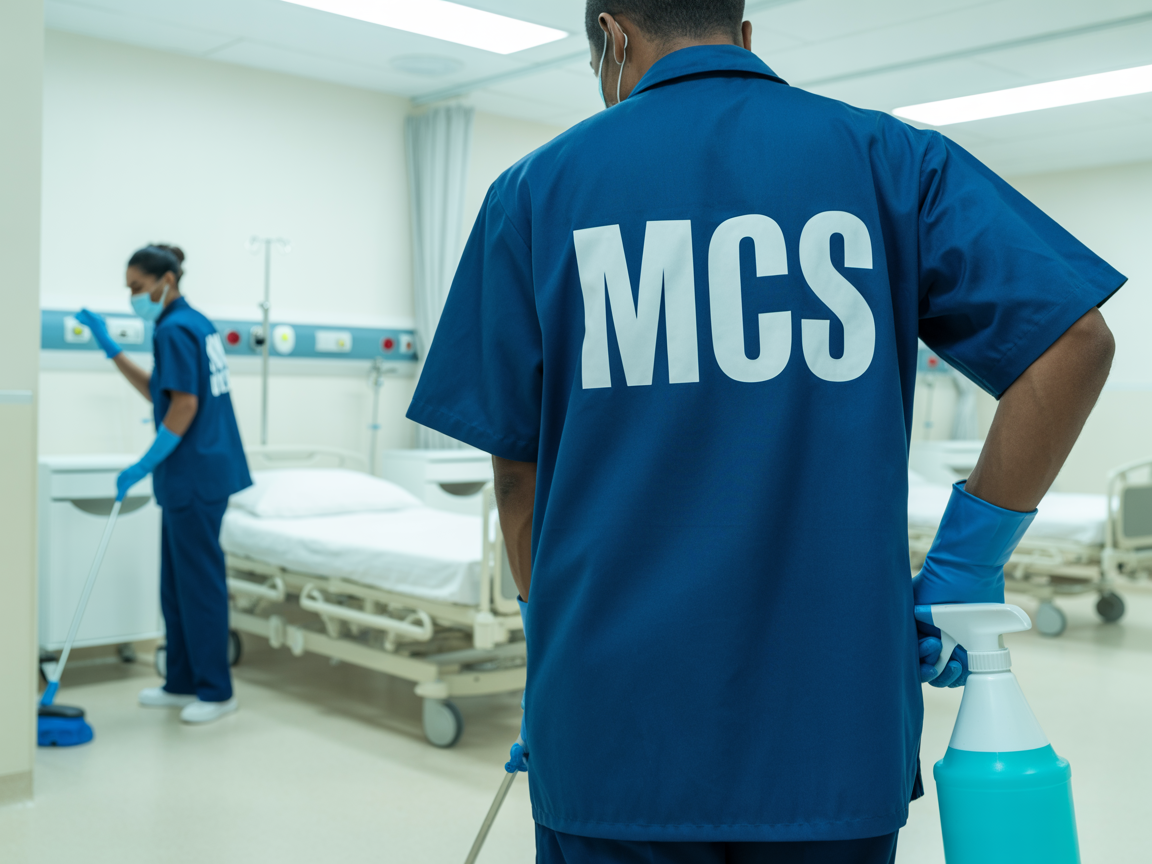
What do CQC inspectors actually look at during a visit?
During an inspection, CQC assessors will examine both the physical cleanliness of the premises and the systems you have in place to maintain it.
Physical cleanliness: Inspectors will walk through the entire surgery looking at surfaces in consultation rooms, the condition of flooring, patient toilets, hand washing facilities, clinical areas, and general areas. They look for dust on high surfaces and air vents, staining on carpets or floors, limescale on taps and sinks, grime on door handles and light switches, and any signs of inadequate cleaning behind or under furniture and equipment.
Documented cleaning schedules: Inspectors want to see written evidence that cleaning is happening regularly and consistently. This means signed and dated cleaning checklists, a clear schedule showing what gets cleaned and how often, records of who performed the cleaning, and evidence that the schedule is actually being followed (not just a template that's never filled in).
Colour-coded cleaning equipment: CQC expects GP surgeries to use a colour-coded cleaning system to prevent cross-contamination between different areas. The standard system is blue for general areas (offices, corridors, waiting rooms), red for sanitary areas (toilets, bathroom fixtures), green for catering areas (kitchen, staff room), and yellow for clinical areas (consultation rooms, treatment rooms). Inspectors will check that your cleaning team is using the correct colour-coded equipment in each area.
Infection control procedures: Beyond cleaning, inspectors assess your broader infection prevention and control arrangements. This includes hand hygiene facilities and their condition, clinical waste handling and segregation, the type of cleaning products being used (they should be medical-grade disinfectants, not standard household products), and staff training records on infection control.
What are the most common cleaning failures flagged by CQC?
Having reviewed hundreds of CQC inspection reports for GP surgeries, certain cleaning failures appear repeatedly.
Inconsistent cleaning schedules are the most common issue. The surgery might have a cleaning schedule on paper, but it's not being consistently completed or signed off. Gaps in the records suggest cleaning is being missed.
No documented evidence of cleaning is closely related. Even if the surgery looks clean, CQC wants to see proof. A clean waiting room without a signed schedule is a risk in the inspector's eyes because there's no assurance it will be maintained.
Cross-contamination risks from using the same cleaning cloths in multiple areas, or not following the colour-coded system, are flagged regularly. This is a significant infection control concern in a clinical environment.
Dusty vents and high surfaces are often missed by cleaning teams that focus on visible surfaces at eye level. CQC inspectors look up as well as around.
Dirty patient toilets are a visible indicator to inspectors that cleaning standards may be inadequate throughout the premises. If the area patients can see is dirty, what does that say about areas they can't see?
Unclean waiting room items such as toys, magazines, and leaflet holders can harbour bacteria and are sometimes overlooked during routine cleaning.
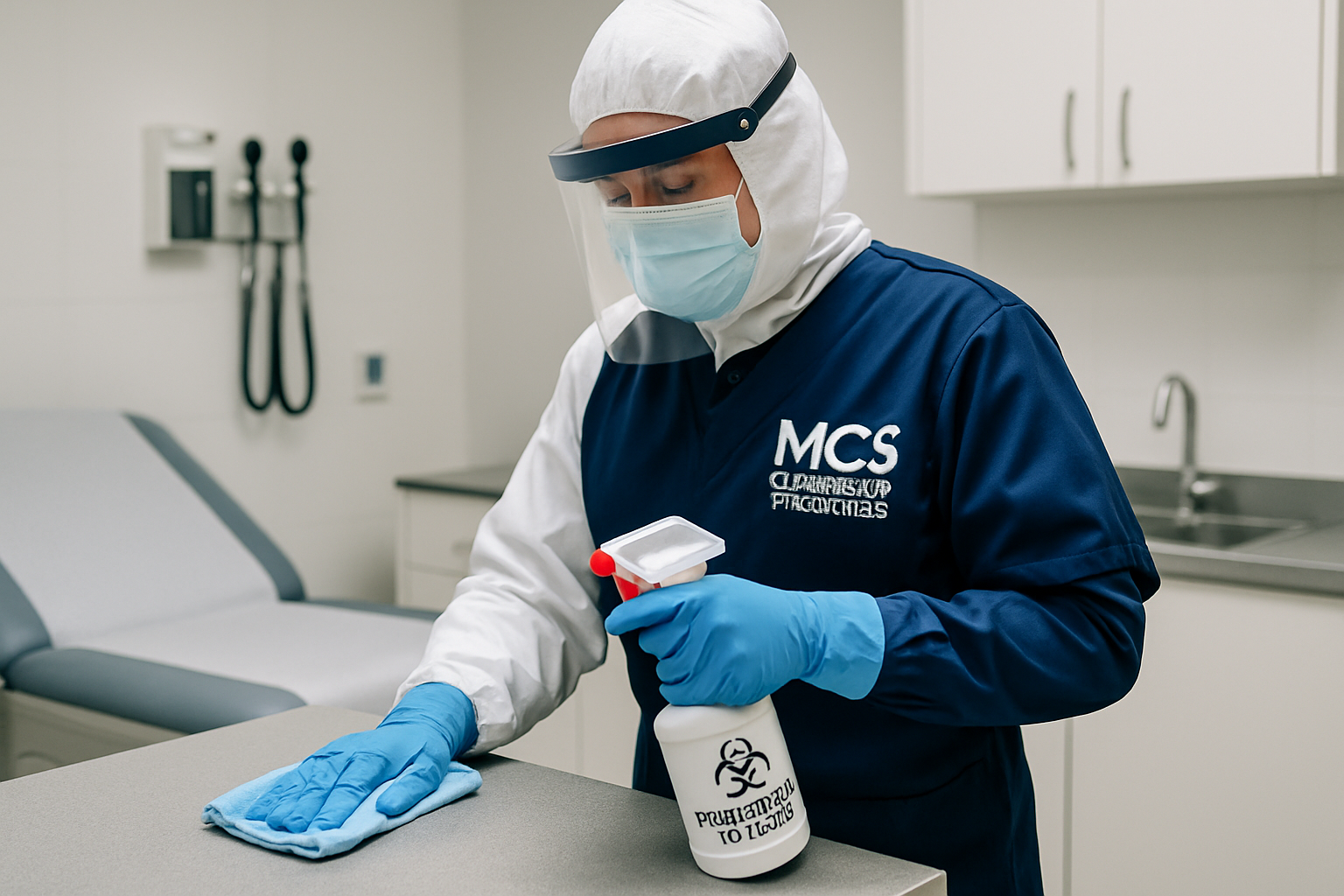
Why do standard commercial cleaners often fall short in GP surgeries?
Many GP surgeries hire standard commercial or office cleaning companies. While these companies may do an adequate job in a regular office environment, they frequently fail to meet CQC standards in a healthcare setting.
The reasons are straightforward. Standard commercial cleaners typically don't understand the colour-coded system or why it matters in a clinical environment. They use general-purpose cleaning products rather than medical-grade disinfectants. They don't complete the detailed, signed cleaning schedules that CQC requires. They clean to a visual standard rather than an infection control standard. And their staff haven't been trained in healthcare-specific hygiene requirements.
The result is a surgery that may look clean on the surface but doesn't meet the documented, systematic cleaning standards that CQC demands.
How can you get your GP surgery cleaning right?
The most effective approach is to work with a cleaning company that specialises in healthcare environments and understands CQC requirements.
At MCS Cleaning, our medical cleaning team has been trained by a certified CQC compliance consultant. We hold a personal recommendation letter from that consultant, who noted a "marked change in the standards of cleanliness" at a GP practice after we took over the cleaning contract. Our protocols are specifically designed to meet Regulation 12 and Regulation 15 requirements.
We provide colour-coded cleaning equipment as standard, use medical-grade disinfectants appropriate for clinical environments, complete signed and dated cleaning schedules for every visit, train all staff on healthcare infection control procedures, and offer flexible scheduling around patient appointments including early morning, evening, and weekend slots.
Areas We Serve
We provide GP surgery cleaning across North West London including Harrow, Watford, Wembley, Pinner, Northwood, Rickmansworth, Stanmore, Edgware, Kenton, Brent, Finchley, Hendon, and Barnet.
We also provide cleaning for dental practices, care homes, and medical centres across the same areas.
Get in Touch
If you're a practice manager looking for CQC-compliant cleaning, or if you're preparing for an upcoming inspection and want to make sure your cleaning arrangements are up to standard, we'd be happy to discuss your needs.
Request a free site survey and quote or call us on 020 7993 8722.
Frequently Asked Questions
Regulation 15 of the Health and Social Care Act 2008 (Regulated Activities) Regulations 2014 covers premises and equipment. It requires that all areas used for care are clean, suitable, and properly maintained. Non-compliance can result in requirement notices or conditions on your CQC registration.
Need help with medical or healthcare cleaning?
Get a free, no-obligation quote from MCS Cleaning. Serving Harrow, Watford, Pinner & North West London.
Written by MCS Cleaning & Facilities
Professional commercial cleaning services in Harrow, Watford & North West London. CQC compliant, fully insured, 60+ five-star Google reviews.
Related Articles
How Much Does GP Surgery Cleaning Cost? A Guide for Practice Managers
Budgeting for cleaning in a GP surgery isn't the same as budgeting for a standard office clean. The requirements are higher, the compliance burden is real, and the consequences of getting it wrong ...
Medical Facility Cleaning: CQC Compliance Guide for Healthcare
Complete guide to CQC-compliant medical facility cleaning. Ensure your healthcare premises meet regulatory standards with professional cleaning services.