Key Takeaways
- Getting communal cleaning right requires understanding what needs cleaning, how often, and to what standard.
- The Social Housing Regulator expects decent standards of maintenance and communal upkeep, and residents have the right to complain through the Housing Ombudsman if standards fall short.
- The key is setting realistic expectations and then consistently meeting them.
If you manage a block of flats, a housing association property, or any building with shared spaces, communal area cleaning is one of your most visible responsibilities. Residents interact with these s
If you manage a block of flats, a housing association property, or any building with shared spaces, communal area cleaning is one of your most visible responsibilities. Residents interact with these spaces every day - the entrance hall, the stairwell, the corridors, the lift. When these areas are dirty or poorly maintained, residents notice immediately and complaints follow quickly.
Getting communal cleaning right requires understanding what needs cleaning, how often, and to what standard.
What are your legal obligations for communal cleaning?
Landlords, freeholders, and management companies have a legal duty to maintain common areas in a clean, safe, and well-maintained condition. This obligation typically comes from the lease terms (most leases require the landlord or management company to maintain common parts), health and safety legislation (dirty or wet communal floors create slip hazards, blocked corridors create fire risks), and the Homes (Fitness for Human Habitation) Act 2018, which requires landlords to ensure rental properties are fit for habitation.
For housing associations and registered social landlords, there are additional regulatory expectations. The Social Housing Regulator expects decent standards of maintenance and communal upkeep, and residents have the right to complain through the Housing Ombudsman if standards fall short.
What counts as a communal area?
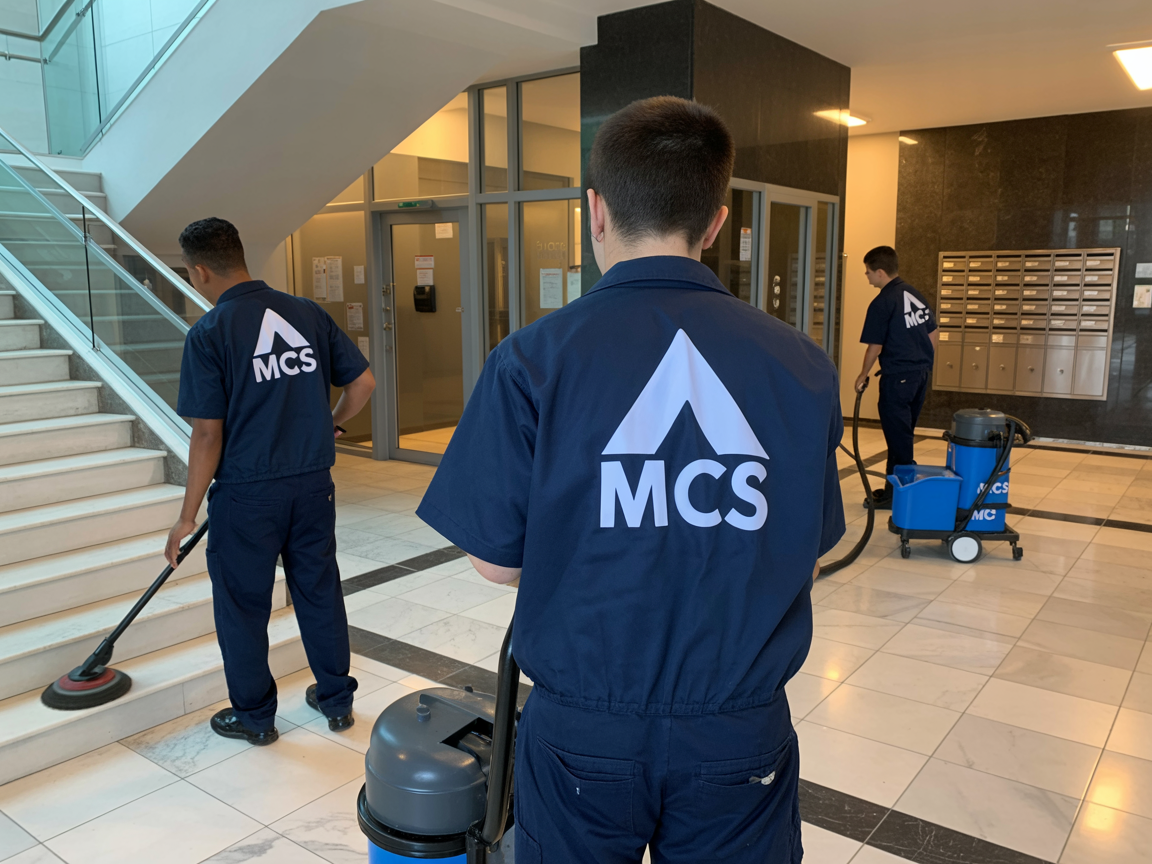
Communal areas cover more ground than many property managers initially account for. A comprehensive communal cleaning programme should cover entrance halls and lobby areas, stairwells and landings on every floor, corridors and hallways, lifts including walls, floor, and buttons, bin storage areas, car parks and garages (at least basic sweeping and litter removal), laundry rooms if applicable, shared gardens and outdoor seating areas, intercom panels and door entry systems, post room or mailbox areas, and cycle stores.
How often should each communal area be cleaned?
Different areas need different frequencies based on how heavily they're used and how quickly they get dirty.
Entrance halls and lobbies are the highest-traffic areas and set the tone for the entire building. In blocks of more than 10 units, these should be cleaned daily or at minimum three times per week. In smaller blocks, twice weekly may suffice. Cleaning should include floor sweeping and mopping, mat cleaning, door and glass cleaning, and surface wiping.
Stairwells and corridors should be cleaned weekly in most buildings. This includes sweeping or vacuuming all treads and landings, mopping hard floors, wiping handrails, and removing cobwebs from corners and light fittings.
Lifts should be cleaned daily in busy buildings. Lift interiors show dirt quickly and are a common complaint point. Floor mopping, wall and mirror wiping, and button panel sanitisation should be done on every visit.
Bin stores need weekly cleaning at minimum, more frequently in summer when waste decomposes faster and attracts pests. This includes washing down floors, cleaning bin housings, and checking for pest activity.
Car parks need monthly sweeping and litter removal, with more frequent attention to stairwells and pedestrian areas within the car park.
What health and safety issues apply to communal area cleaning?
Beyond aesthetics, communal area cleaning has real health and safety implications.
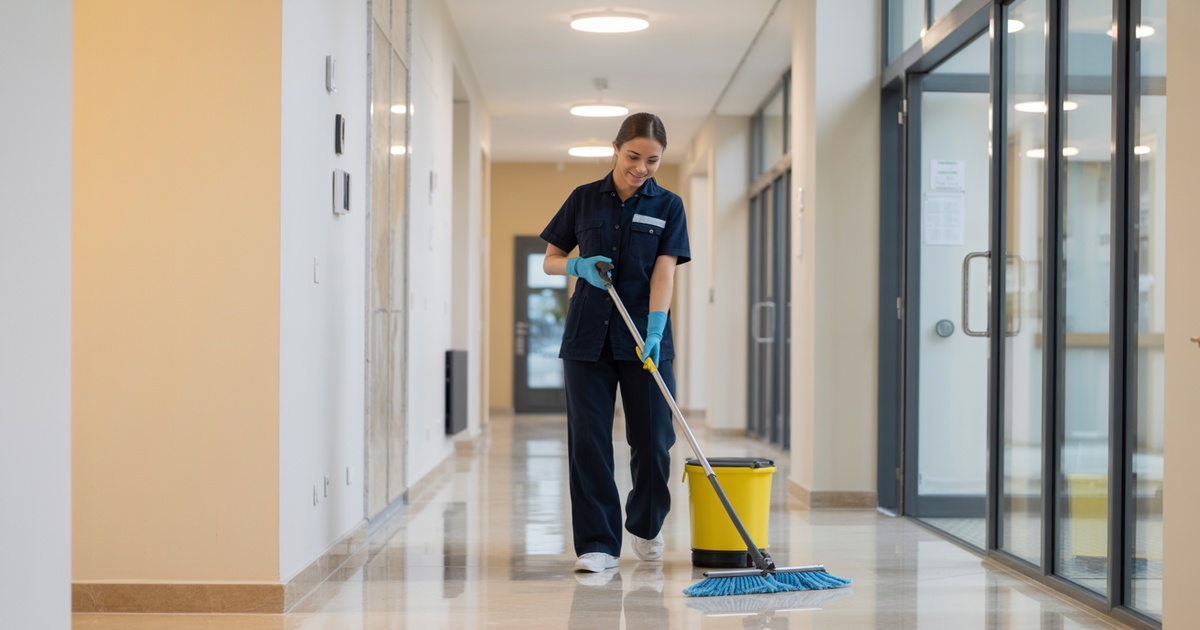
Slip hazards are the most common issue. Wet or dirty hard floors in entrance halls and corridors can cause falls, particularly among elderly residents. Cleaning schedules should ensure floors aren't left wet during peak foot traffic times, and appropriate wet floor signage should be used.
Fire safety requires that corridors and stairwells are kept clear of obstacles and debris. Accumulations of rubbish, discarded furniture, or deliveries in communal areas create fire hazards and impede escape routes.
Pest prevention starts with clean bin stores. Overflowing bins, food waste on the floor, and dirty bin housings attract rats, mice, foxes, and insects. Regular cleaning and reporting of issues prevents infestations before they establish.
Air quality in enclosed communal areas like corridors and stairwells can be affected by accumulated dust, mould, and poor ventilation. Regular cleaning of air vents, extraction of dust from carpeted areas, and prompt treatment of any damp or mould maintains healthy air quality for residents.
How do you balance resident expectations with budget?
The tension between what residents expect and what the service charge budget allows is one of the most common challenges in communal area management. Residents want spotless common areas at all times. The budget may only allow for cleaning twice a week.
The key is setting realistic expectations and then consistently meeting them. A well-communicated cleaning schedule that's reliably delivered is better than an ambitious schedule that's inconsistently followed.
Communicate the cleaning schedule to residents - put it on the noticeboard and include it in welcome packs for new residents. When residents know that stairwells are cleaned every Wednesday, they're less likely to complain about them looking dirty on Monday.
What are the benefits of a professional cleaning contract?
Many smaller blocks rely on ad-hoc cleaning arrangements - a local individual who comes when they can, or a rotating responsibility among residents. This rarely produces consistent results.
A professional cleaning contract provides several advantages: guaranteed attendance on agreed days, consistent standards backed by training and checklists, insurance protection if anything goes wrong, cover for holidays and sickness, and accountability through a formal contract.
For blocks in areas like Wembley, Hendon, and Edgware - where high-density apartment buildings are common - professional communal cleaning is particularly important given the high footfall in shared spaces.
Our communal area cleaning service covers all types of residential buildings across North West London, from small 6-unit blocks to large housing association estates. We also provide deep cleaning for periodic intensive cleans of communal areas.
Get a free quote or call 020 7993 8722.
Frequently Asked Questions
There is no single prescribed standard, but the Housing Act 2004, fire safety legislation, and lease obligations all require communal areas to be kept clean, safe, and in good repair. Failure to maintain these areas can result in enforcement action from the local authority.
Need help with professional cleaning?
Get a free, no-obligation quote from MCS Cleaning. Serving Harrow, Watford, Pinner & North West London.
Written by MCS Cleaning & Facilities
Professional commercial cleaning services in Harrow, Watford & North West London. CQC compliant, fully insured, 60+ five-star Google reviews.